
Hops: The Ingredient That Gives Beer Its Character
Of beer’s four classic ingredients — water, malt, yeast and hops — hops were the last to arrive in the recipe, and yet they are the ones that give it the most character. Without them, beer would be a sweet, flat drink; with them, the balance, the perfume and a good part of each style’s personality appear. This is their story, told from our bar.
A plant with a trade
The hop (Humulus lupulus) is a climbing plant that can grow several metres in a single season. What we brewers use are the flowers of the female plant: green, light cones that keep inside them the lupulin, a yellow resin where all their power lives: the acids that bitter and the oils that perfume.
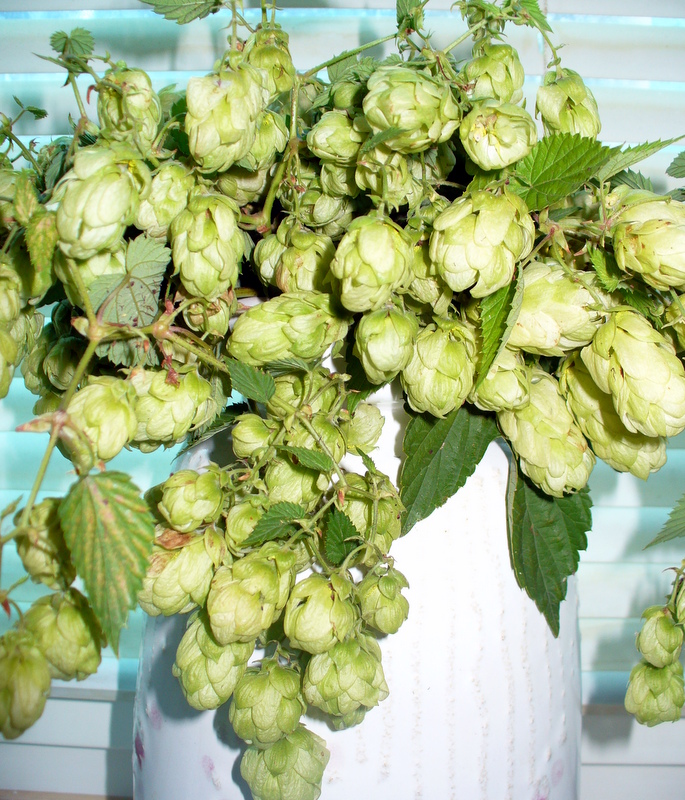
Three jobs in a single ingredient
Hops do three things at once. First, they bitter: their acids balance the natural sweetness of the malt, and that bitterness is measured in IBU, the units you see on our spec sheets. Second, they aromatise: their essential oils bring citrus, floral, herbal, resinous or tropical notes, depending on the variety. And third, they protect: they are a natural preservative that helps the beer keep in good condition.
Timing changes everything
It is not enough which hop is used; it matters when it goes into the kettle. If it is added at the start of the boil, bitterness rules and the aroma almost disappears. If it goes in at the end, the perfume stays. And if it is added cold, already in the fermenter — the technique known as dry hopping — it delivers pure aroma without extra bitterness: it is the secret behind the punch on the nose of many an IPA.
The great families
Like grapes in wine, every variety has its land and its accent. The European nobles are delicate, floral and spiced. The English are earthy and herbal: the classic flavour of the British pub. The Americans are citrusy, resinous and tropical, and they lit the craft beer revolution. And those from New Zealand and Australia bring tropical fruit and notes that recall white wine.
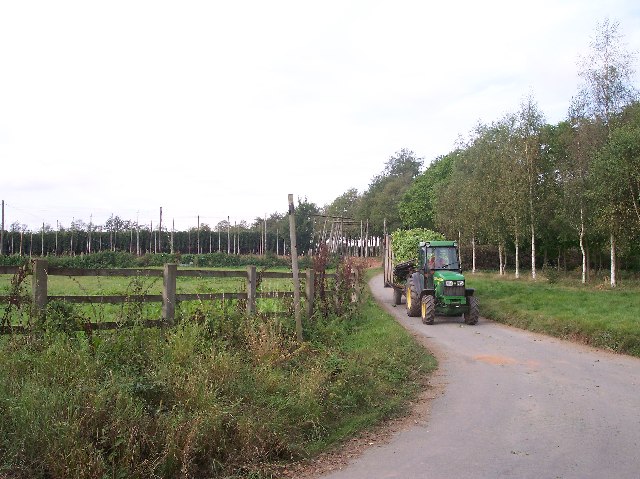
Hops at Alabastro
In the Alabastro family, hops change role according to the style. In our Hefeweizen they are barely noticed (IBU 8–15): there the yeast rules, with its aromas of banana and clove. In the Bitter, English hops hold the balance with a gentle bitterness (IBU 17–28). The APA shows off with American hops and its touch of grapefruit (IBU 30–50), and the IPA goes all in with them (IBU 40–70). In the Stout the bitterness is kept low (IBU 25–40) to let the coffee and the chocolate speak, and in the Imperial Stout it rises with decision (IBU 50–90), because so much malt and so much body need a counterweight equal to them.
The next time you bring your nose to an Alabastro, look for the hops: sometimes they shout, sometimes they whisper, but they are always working. In which style do you enjoy them most?
Photos: harvested cones, Liana.salanta (CC BY-SA 4.0); cones on the plant, Magdalena Šajinovićová (CC BY-SA 3.0); field at harvest, Bob Embleton (CC BY-SA 2.0). Via Wikimedia Commons.